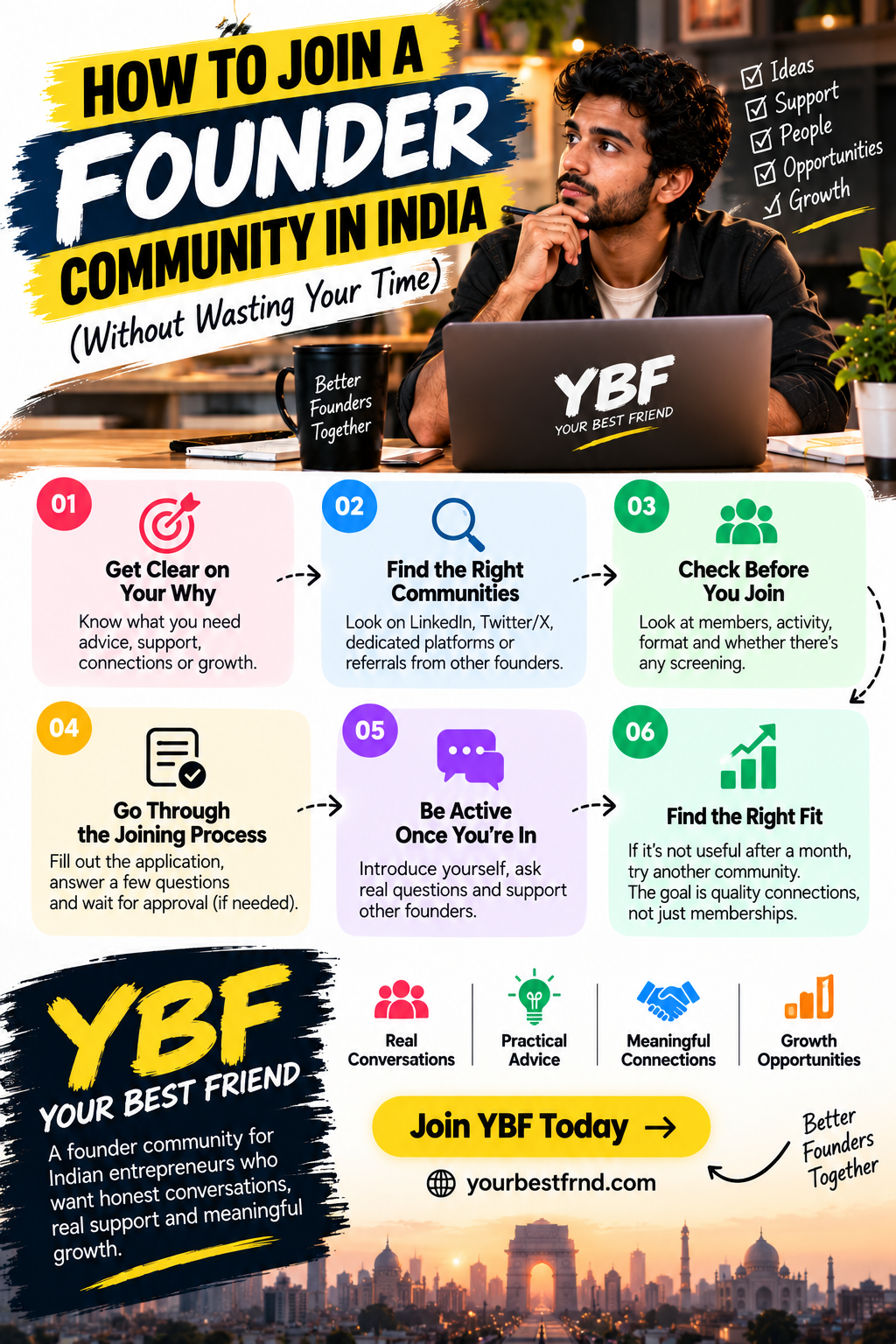
You’ve decided you want in. Maybe you’re tired of figuring everything out alone, maybe someone mentioned how much a good peer group helped them, either way, you’re here wondering how to actually join a founder community in India that’s worth your time. Let’s walk through it properly.
First, Get Clear on Why You Want This
Before you join anything, it helps to know what you’re actually looking for. Some founders want advice on specific problems, like hiring or pricing. Others just want people who get the exhaustion of running a company. Some want introductions to investors or clients. Knowing your “why” changes which community actually fits, so don’t skip this step even though it feels obvious.
Where to Actually Look
A few years back, this meant checking college alumni groups or waiting for the next local meetup. That’s changed a lot. Here’s where most founders find communities now:
LinkedIn is a decent starting point, search for terms like “founder community India” or “entrepreneur network” and you’ll find posts from people already inside one, happy to share an invite. Twitter/X has a surprisingly active founder crowd too, especially around specific niches like SaaS or D2C. Then there are dedicated platforms built specifically for founder networking, which tend to be more structured than a random WhatsApp group someone added you to at an event.
Don’t ignore referrals either. If you know even one founder who’s part of a community they rate highly, just ask them directly. A referral usually gets you a better first impression than cold-applying.
What to Check Before You Commit
Not every group calling itself a “community” deserves your time. Before joining, it’s worth looking at a few things.
Who’s actually in it? Check if members are real founders currently building something, not just people who talk about starting up one day. Is there any screening at all, or does literally anyone get in? A completely open group tends to be noisier and less useful.
How active is it, really? Scroll through recent conversations if you can see them before joining. A community that’s gone quiet for weeks isn’t going to suddenly become valuable because you signed up.
What’s the actual format? Some are pure discussion groups, others add mentorship, events, or curated introductions. Figure out what matches what you need.
The Joining Process Itself
Most communities follow a similar pattern. You’ll usually fill out a short application or form, sometimes answering a question or two about what you’re building. Some have a waitlist, especially the more curated ones, since quality drops fast once a group gets too big too quickly. A few require an invite from an existing member, which is honestly a decent filter for keeping things serious.
Don’t be put off by a short wait or an application step. Communities that screen members usually turn out better than ones that let anyone in immediately.
Once You’re In, Don’t Just Lurk
This part matters more than people expect. Joining does nothing on its own. Introduce yourself properly, not just your name and company, but what you’re actually stuck on right now. Ask a real, specific question early instead of waiting weeks to say anything. And when someone else asks something you know the answer to, reply. Communities run on this kind of back and forth, and the founders who get the most out of them are usually the ones who show up consistently, not the ones who joined with the biggest plans.
A Quick Gut Check
If after a month of actually participating you’re not getting anything out of it, that’s useful information too. Not every community fits every founder, and it’s fine to leave one and try another. The goal isn’t to collect memberships, it’s to find a handful of people you can genuinely rely on.
Ready to Join One?
YBF (Your Best Friend) is built for Indian founders who want honest conversations, not just another silent group chat. Visit yourbestfrnd.com to apply and join the community.