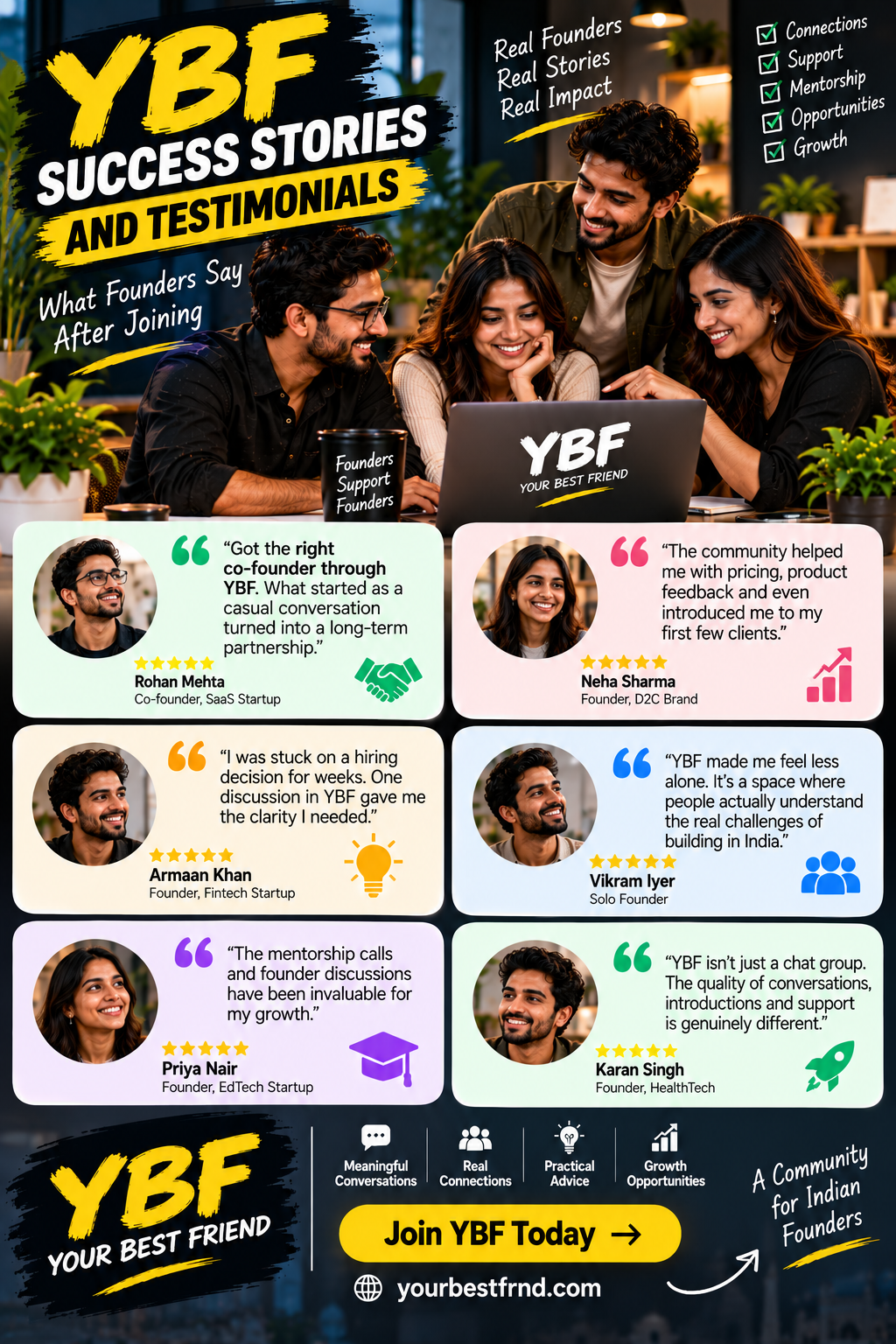
Numbers and features only tell you so much about a community. What actually convinces most founders to join something is hearing from people who’ve already been through it. That’s why so many people search for YBF success stories and testimonials before deciding whether to sign up.
Why Testimonials Matter More Than a Features List
Anyone can write a webpage describing what a community offers. It’s a lot harder to fake genuine stories from real founders about how a group actually helped them. That’s the gap testimonials fill, they’re proof, not promises.
When you’re deciding whether to invest time in a founder community, you’re really asking one question: did this actually change something for people like me? Success stories answer that far better than a list of features ever could.
The Kinds of Stories That Keep Coming Up
Across founder communities in general, and ones like YBF specifically, certain patterns show up again and again in member stories.
The stuck problem that finally moved. A founder spends weeks circling a decision, whether that’s pricing, a difficult hire, or a co-founder conflict, and one conversation in the community unlocks it. Not because anyone had a magic answer, but because someone had already lived through the exact same situation.
The introduction that mattered. Someone mentions what they’re building, and a fellow member connects them to a client, an investor, or exactly the right hire. These introductions often happen casually, almost as an afterthought, but turn into some of the most valuable outcomes members report.
The loneliness that eased. This one comes up more than people expect. Founders often describe feeling isolated even while running a growing company, and simply having a group that understands that specific kind of pressure makes a real difference to how sustainable the journey feels.
The accountability that kept them moving. Telling a group of peers “I’m shipping this by next month” creates a different kind of pressure than a private goal. Several founders credit this simple habit with helping them actually follow through on plans that might otherwise have slipped.
Why These Stories Are Hard to Fake
Genuine testimonials tend to share a few qualities that manufactured ones don’t. They’re specific, naming an actual problem and what actually happened, not vague praise like “great community, highly recommend.” They often mention a particular person or conversation, not just the platform in general. And they usually include some honesty about the parts that took effort, since real growth rarely comes without any friction at all.
When you’re reading reviews anywhere, not just for YBF, these details are a good way to separate authentic feedback from generic filler.
What to Do With Testimonials Before Joining
Read them, but also do one more thing: reach out directly if you can. Many founder communities make it possible to message existing members before committing. A two-minute conversation with someone already inside often tells you more than ten written reviews.
Also pay attention to whether the stories sound like your situation. A testimonial from a funded Series A founder may not tell you much if you’re bootstrapping solo. Look for stories from founders at a stage and industry closer to yours.
The Honest Caveat
Not every member has the same experience, and that’s true of any community anywhere. What generally separates a good outcome from a disappointing one isn’t the platform itself, it’s participation. Founders who show up, ask real questions, and contribute back tend to be the ones with stories worth telling. Those who join and stay quiet usually don’t have much to report either way.
Read Real Stories from YBF Members
YBF (Your Best Friend) connects founders across India through genuine conversations and real support. Visit yourbestfrnd.com to read current member stories and see what the community has helped people achieve.