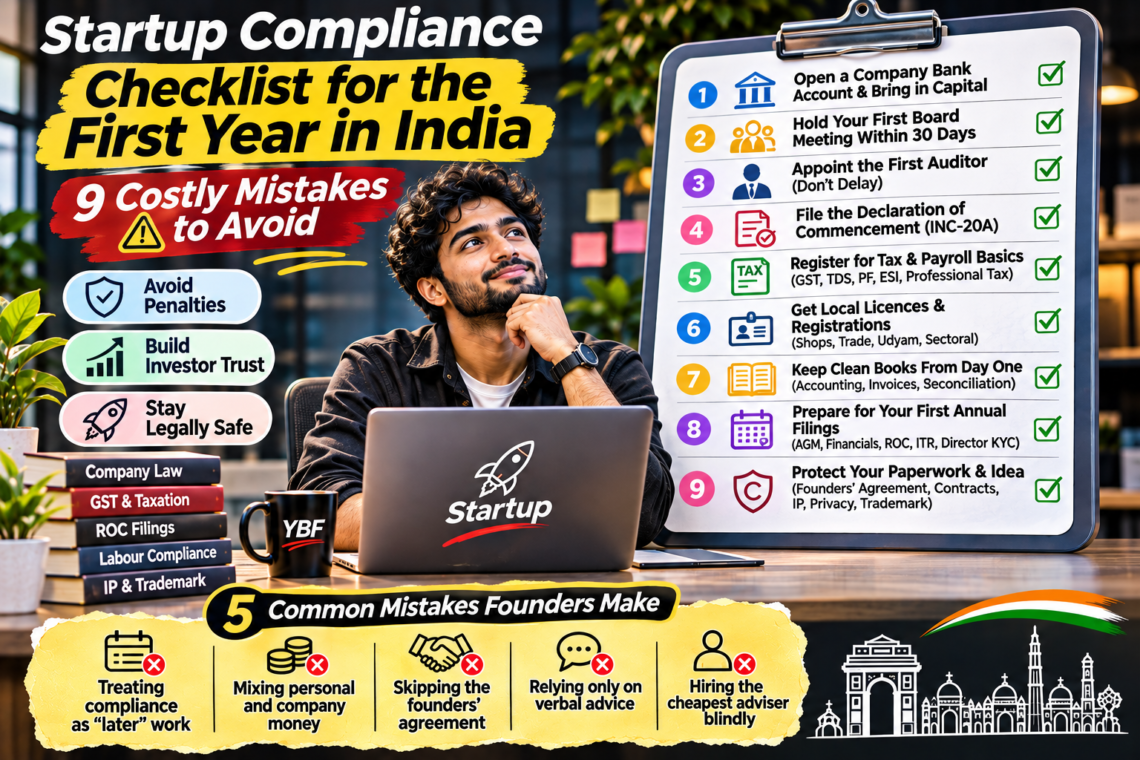
Most founders celebrate the certificate of incorporation, then forget about paperwork for six months. That’s where the trouble starts. Late fees pile up, filings get missed and a clean company slowly turns into a messy one. This startup compliance checklist for the first year in India gives you nine essential steps, in plain language, so small slips never become expensive problems.
Note: this is general information, not legal or tax advice. Rules and deadlines change, so confirm details with a chartered accountant or company secretary and the official MCA portal.
Why the First Year Matters Most
The first twelve months set the habits for the whole company. Good records, on-time filings and tidy paperwork make fundraising, hiring and audits far easier. Ignoring compliance is risky, because penalties often run per day and keep growing until you file.
A strong startup compliance checklist for the first year in India protects three things: your money, your reputation and your investors’ trust.
Step 1: Open a Company Bank Account and Bring in the Capital
Open a current account in the company’s name straight after incorporation. Deposit the subscribers’ share capital here, not into a personal account. Many later filings rely on this money being in place, so skipping it creates avoidable trouble.
Step 2: Hold Your First Board Meeting Within 30 Days
The first board meeting is commonly expected within 30 days of incorporation. Use it to:
- Appoint the first auditor
- Adopt the company’s registers and seal if used
- Authorise bank signatories
- Record disclosures from directors
Write proper minutes. Forgotten minutes cause real headaches later.
Step 3: Appoint the First Auditor (Don’t Delay)
The board usually needs to appoint the first auditor within 30 days of incorporation. Missing this window can force a more complicated process later. Once appointed, file the required intimation with the registrar within the stated time.
Step 4: File the Declaration of Commencement of Business
Companies with share capital generally must file a declaration of commencement of business, commonly known as INC-20A, within 180 days of incorporation, after capital has been paid in. Failing to file can bring penalties and, in severe cases, trouble with the company’s standing. Mark the date on your calendar the day you incorporate.
Step 5: Register for Tax and Payroll Basics
Your PAN and TAN usually arrive with incorporation. After that, check what else applies:
- GST: Required once you cross the relevant turnover threshold, or earlier if your business model requires it, such as certain interstate or online sales.
- TDS: Deduct and deposit tax correctly on payments like salaries, rent and professional fees, and file returns on time.
- PF, ESI and professional tax: These depend on headcount, wages and state rules.
Don’t guess. A single wrong assumption on GST or TDS can lead to notices.
Step 6: Get Local Licences and Registrations
Depending on your business and state, you may need a shops and establishment registration, a trade licence or sector-specific permissions for food, health, finance or education. Udyam registration may suit small enterprises. Check state requirements early, because processing can take weeks.
Step 7: Keep Clean Books From Day One
Record every transaction, keep invoices and reconcile your bank account monthly. Use simple accounting software and keep personal expenses completely separate. Founders who delay bookkeeping often spend thousands of rupees fixing a six-month mess.
Step 8: Prepare for Your First Annual Filings
Your first financial year ends on the date you’ve set, and a set of annual filings follows:
- Financial statements and annual return with the registrar
- Income tax return, even if you earned nothing
- First annual general meeting, commonly within nine months of the end of the first financial year
- Director KYC, as required by current rules
Late fees on these filings can add up quickly, so ask your accountant for a calendar and stick to it.
Step 9: Protect Your Paperwork and Your Idea
Put the basics in writing early:
- A founders’ agreement covering roles, equity and vesting
- Employment contracts with confidentiality and intellectual property clauses
- Intellectual property assignment so the company owns what it builds
- Privacy policy and terms, if you collect customer data
- Trademark filing for your name and logo, if branding matters
These documents cost little now and save a great deal later.
5 Common Mistakes That Cost Founders Dearly
- Treating compliance as “later” work. Deadlines don’t wait for you.
- Mixing personal and company money. It confuses accounts and weakens legal protection.
- Skipping the founders’ agreement. Disputes over equity are painful and expensive.
- Relying only on verbal advice. Always get important guidance in writing.
- Hiring the cheapest adviser blindly. A low fee means little if filings are late or wrong.
A Simple Way to Stay on Track
Create one shared calendar with every deadline for the year. Add reminders two weeks and two days before each date. Assign one person, whether a founder or your accountant, to own the calendar. Review it every month in a ten-minute check-in.
Get Support From Founders Who’ve Been There
Founders who’ve already survived their first year can tell you which advisers were reliable and which shortcuts backfired. YBF (Your Best Friend) is a community for Indian entrepreneurs where founders swap honest, practical advice. You can also find more guides on our resource page.
Final Word
A solid startup compliance checklist for the first year in India won’t make your company grow, but it keeps growth from being derailed. Open the bank account, hold the board meeting, appoint the auditor, file on time and keep clean records. Do these nine things consistently, and you’ll walk into year two confident, protected and ready to scale.