Every founder hits a point where hard work alone is not enough. You need someone who has already faced the same problems, whether that is a first hire, a funding round or a product that is not selling. That is where startup mentorship programs in India come in. A good mentor can save you months of trial and error and help you avoid expensive mistakes. A poor match, however, can waste your time or push you in the wrong direction. In this article, we look at how these programs work, where to find them and how to choose the right one.
Why Mentorship Matters for Indian Startups
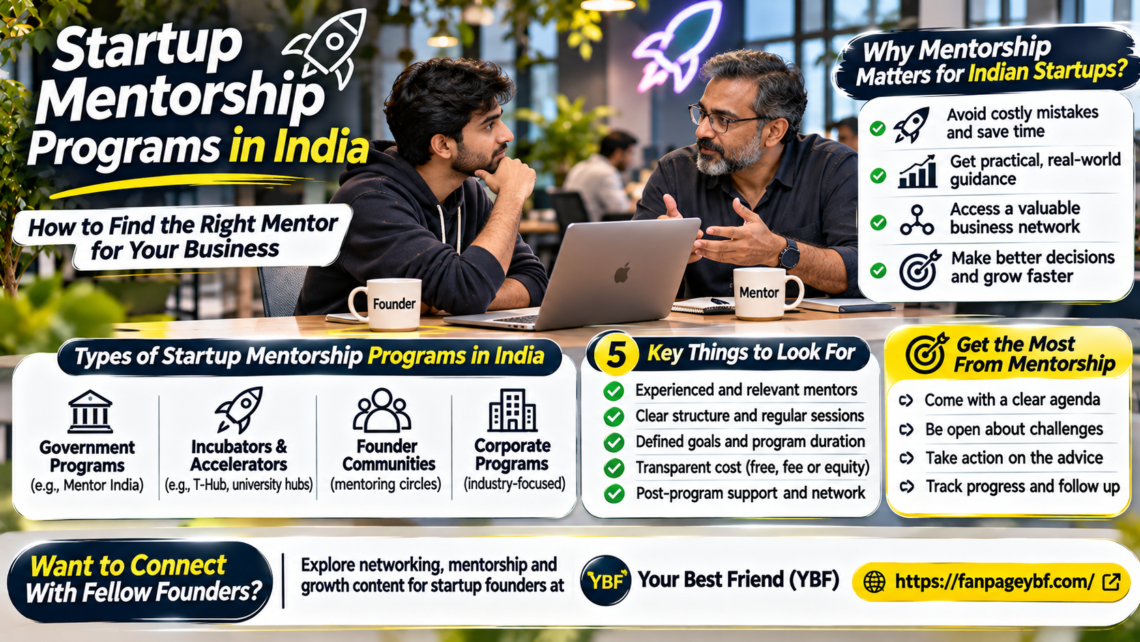
Building a startup in India comes with its own challenges, from navigating compliance and funding to hiring talent and reaching customers in a diverse market. First-time founders often learn these lessons the hard way. A mentor shares real experience, gives honest feedback and opens doors to their network. Studies and founder stories repeatedly show that startups with strong guidance tend to make better decisions earlier. Good startup mentorship programs in India bring structure to this relationship, so founders get regular access to experienced people instead of relying on chance meetings.
Types of Startup Mentorship Programs Available
There are several kinds of programs to choose from. Government-backed initiatives, such as the Atal Innovation Mission’s Mentor India program, connect startups with experienced professionals. Incubators and accelerators, including university-linked ones and city hubs like T-Hub in Hyderabad, combine mentoring with workspace, workshops and investor access. Industry bodies and founder communities also run mentoring circles, and some corporates offer programs for startups in their sector. Details and eligibility change often, so always check each program’s official website for current information before applying.
What to Look for in a Good Program
Start with the quality of the mentors. Look for people who have built or scaled real businesses, ideally in your industry or at your stage, rather than only senior titles. Check how often you will meet, whether sessions are one-to-one or in groups and what support continues after the program ends. A strong program also has clear goals, a defined duration and a way to measure progress. Finally, ask about the cost. Some programs are free, some charge a fee and some take equity, so understand the terms fully before committing.
How to Choose the Right Mentor for Your Stage
A mentor who suits an idea-stage founder may not be right for a company preparing to raise a Series A. Be clear about what you need most right now, whether that is product direction, sales strategy, fundraising, hiring or operations. Then look for a mentor who has solved that exact problem. Chemistry also matters, because you should feel comfortable sharing difficulties and hearing honest criticism. Many programs allow a trial session or two, which is a good way to test the fit before a longer commitment.
How to Get the Most From Mentorship
Mentorship works best when the founder is prepared. Come to every meeting with a clear agenda, specific questions and updates on what you did since the last session. Be open about problems, not just successes, and act on the advice that makes sense for you. Remember that a mentor offers perspective, while the final decisions stay with you. Keep a short record of key takeaways and follow up with progress, since mentors are far more willing to help founders who show real action.
Beyond formal programs, founder communities are a great place to meet potential mentors and peers who understand the same journey. You can explore networking, mentorship and growth content for startup founders at Your Best Friend (YBF), a community built around founders and entrepreneurs in India.
Common Mistakes Founders Make
The most common mistake is choosing a program for its brand name alone, without checking whether the mentors fit your needs. The second is joining without clear goals, which leads to casual chats and no real progress. The third is expecting the mentor to solve everything, instead of using the guidance to think and act better. Another frequent error is ignoring the terms, such as equity or fees. A little homework before applying avoids frustration and keeps your focus on building the business.
Conclusion
The right startup mentorship programme in India gives you experienced guidance, a supportive network and the confidence to make better decisions. Define what you need, compare two or three programs on mentor quality, structure and cost, and then commit fully once you choose. Used well, mentorship can shorten your learning curve and help your startup grow with fewer costly mistakes.