People do not just buy products. They buy from people they trust. That is why founder personal branding has become one of the most powerful growth tools for startups and small businesses. When customers, investors and talented hires know who you are and what you stand for, they are far more willing to engage with your company. But a weak or inconsistent personal brand can leave you invisible, or worse, send the wrong message. In this article, we look at what personal branding means for founders, why it matters and how to build one the right way.
What Is Founder Personal Branding?
Founder personal branding is the way the market sees you as the person behind the business. It includes your story, your expertise, your values, the way you communicate and the content you share. It is not about becoming a celebrity or showing off. It is about being clear, consistent and credible. A strong personal brand makes people think of you when they have a problem you can solve, and it gives your company a human face that a logo alone cannot provide.
Why Personal Branding Matters for Founders
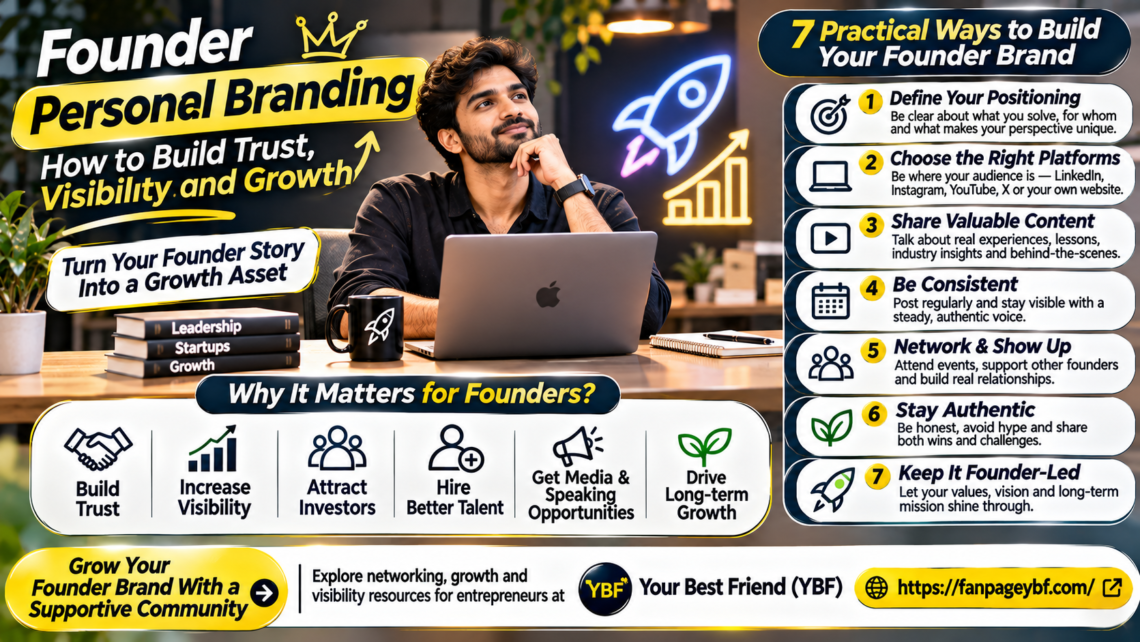
Startups often have small budgets and little brand awareness, and a visible founder can close that gap faster than paid ads. Customers trust a business more when they can see and understand the person running it. Investors look closely at the founder’s credibility, vision and track record. Talented people also prefer to join companies led by someone they admire and believe in. Over time, a good personal brand can bring inbound leads, partnership offers, media opportunities and speaking invitations without a heavy marketing spend.
Start With a Clear Positioning
Before posting anything, decide what you want to be known for. Ask yourself what problem you solve, who you serve and what makes your perspective different. Your positioning should be simple enough to explain in one or two sentences. For example, you might be the founder who helps small manufacturers go digital, or the leader who builds with limited resources. This clarity makes every post, talk and conversation more focused, and it helps people remember you.
Choose the Right Platforms
You do not need to be everywhere. Pick one or two platforms where your audience spends time and where you can stay consistent. LinkedIn works well for most B2B founders, while Instagram, YouTube or X may suit founders targeting consumers or younger audiences. A clean, professional profile with a clear photo, a strong headline and a short summary of what you do is the foundation. Your own website or a simple profile page can also serve as a central place where people can learn more about you.
Share Content That Builds Credibility
Consistency matters more than perfection. Share your real experiences, including lessons learned, mistakes made and behind-the-scenes decisions. Explain your industry in simple language, comment on trends and answer the questions your customers keep asking. Mix educational posts with personal stories, since people connect with both knowledge and honesty. Short posts, videos, newsletters and guest articles all help. A steady rhythm of useful content, even once or twice a week, builds trust far more than occasional big announcements.
Network and Show Up in Your Community
Personal branding is not only online. Attend founder meetups, industry events and community gatherings, speak at panels where you can, and support other entrepreneurs publicly. Thoughtful comments on other people’s posts, introductions and genuine help build your reputation as a generous and knowledgeable person. You can explore networking, growth and visibility content for entrepreneurs at Your Best Friend (YBF), a community built around founders in India.
Common Mistakes to Avoid
The biggest mistake is being inconsistent, posting heavily for two weeks and then disappearing for months. The second is turning every post into a sales pitch, which makes people tune out. The third is copying another founder’s style instead of developing your own voice. Another common error is overstating achievements, which damages trust once it is noticed. Keep your claims honest, keep your tone natural and focus on being useful.
Conclusion
Strong founder personal branding is built through clear positioning, consistent and honest content and real relationships, not through hype. Decide what you want to be known for, pick your platforms, share your journey regularly and stay patient. Over time, your personal brand becomes an asset that helps your company win customers, investors and great people.