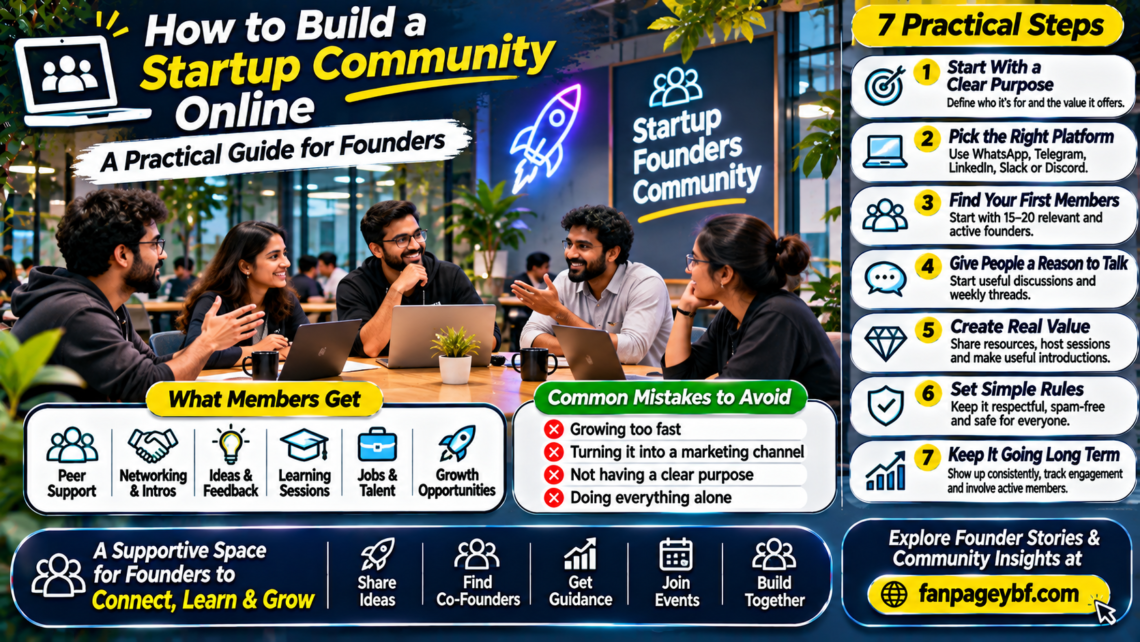
Every founder has felt it. You are working on something hard, nobody around you quite understands the problem, and you wish you could talk to someone who has been through it. That is exactly why startup communities exist. Some of the best ones started with a single founder who got tired of waiting for such a group to appear and started one. If you are wondering how to build a startup community online, the good news is that you do not need a big budget or a big following. You need a clear purpose, a few committed people and the patience to keep showing up. Here is how it usually works.
Start With a Clear Purpose
Before you pick a platform or send a single invite, answer one question. Who is this community for, and what will they get out of it? “A community for startup founders” is too wide. “A community for first time founders in India building B2B software” is much easier to explain and much easier to join. A narrow focus feels more useful to members, and it makes it easier to find them. You can always widen later. It is much harder to narrow down once the group has grown into a general chat room.
Pick a Platform Your Members Already Use
The best platform is the one people will actually open every day. For many Indian founders, that is WhatsApp or Telegram. LinkedIn groups work well for professional discussions, and Slack or Discord suit communities that want separate channels for topics like funding, hiring and product. Some founders use a forum or a membership tool for more structure. Do not overthink it. Start where your first twenty members already spend time, and move later if you need to. A tool that nobody checks will kill a community faster than any other mistake.
Find Your First Twenty Members
The first members matter most because they set the tone. Do not start with a public announcement. Message people you already know, such as founders you have met at events, former colleagues who started companies or people who comment thoughtfully on your posts. Tell them clearly what the group is for and what you hope to see in it. Ask them to invite one person each who would add value. Aim for quality over numbers. Twenty active, helpful members will make a better community than five hundred silent ones.
Give People a Reason to Talk
An empty group is awkward. Nobody wants to be the first to post. So seed the conversation yourself. Share a useful article, ask a question about something you are stuck on or invite members to introduce themselves and say what they are working on. Run simple weekly rituals, such as a Monday thread where people share their goals for the week or a Friday thread for wins and lessons. These small habits give the community a rhythm and make it easy for quieter members to join in.
Create Real Value, Not Just Chatter
People stay in communities that help them. Think about what your members need and give it to them. That might be introductions to investors or mentors, short talks from experienced founders, templates for pitch decks and contracts or a place to ask for honest feedback. Host an online session once or twice a month, such as a founder AMA or a hands-on workshop. Share job openings and customer leads. When members start to get real results from the group, such as a first client or a good hire, they tell others and the community grows by word of mouth.
Set Simple Rules and Keep the Space Safe
Every community needs a few ground rules, and it is easier to set them at the start. No spam, no hard selling, be respectful, keep sensitive information private. Make it clear that disagreement is fine but personal attacks are not. Step in quickly when someone breaks the rules, kindly but firmly. A community where people feel safe asking basic or awkward questions is far more valuable than one where everyone is posing. If you are the only moderator, consider asking one or two trusted members to help as the group grows.
Keep It Going Over Time
The hardest part is not launching. It is the third and fourth month, when the initial excitement fades. Show up consistently, even when conversation is slow. Recognise active members publicly, ask what they would like to see more of and listen to the answers. Try meeting offline now and then, such as a coffee meetup in a city where several members live, because online relationships get stronger when people meet in person. Track a few simple numbers like how many members post each week and how many return, so you notice early if things are going quiet.
If you want to see how other founders think about networking and community, you can read more at Your Best Friend (YBF), a community built around entrepreneurs in India.
Mistakes to Avoid
Growing too fast is the first one. A flood of strangers dilutes the culture and gives you a group where nobody feels known. Turning the group into your own marketing channel is the second, and members spot it quickly. Not having a clear purpose leads to a pile of random messages. And doing everything alone burns founders out. Share the work with a few members who care about the group as much as you do.
Wrapping Up
Knowing how to build a startup community online comes down to a few simple habits. Pick a clear purpose, start small with people you trust, give them real value and show up consistently. It will feel slow at first, and that is normal. A community that grows slowly around genuine help tends to last far longer than one that grows quickly around hype.