Running a direct-to-consumer brand in India looks glamorous from outside: a product people love, an Instagram page that grows, orders pinging in. Inside, it’s a daily grind of ad costs, courier delays, cash-on-delivery returns and inventory that eats your cash. That’s why a D2C founder community in India has become one of the most useful things a brand owner can join. Nobody else understands your week quite like another D2C founder.
Why D2C Is Its Own Kind of Hard
D2C isn’t just “startup with a product.” It comes with a specific set of pressures:
- Rising ad costs. What worked at ₹100 per customer last year may cost far more now.
- Cash locked in stock. You pay suppliers upfront and wait weeks to sell.
- Cash on delivery. Many Indian buyers still prefer it, which brings failed deliveries and returns.
- Courier and logistics headaches. Late pickups, damaged parcels, pin codes that don’t deliver.
- Marketplace dependence. Amazon and Flipkart bring volume, but with fees and rules you don’t control.
- Repeat purchase. Getting a first order is one problem. Getting a second is another.
- Seasonal swings. Festive months and sale days create spikes and hangovers.
A generic startup group rarely covers these in depth. A D2C-focused circle does.
What You Get From Other D2C Founders
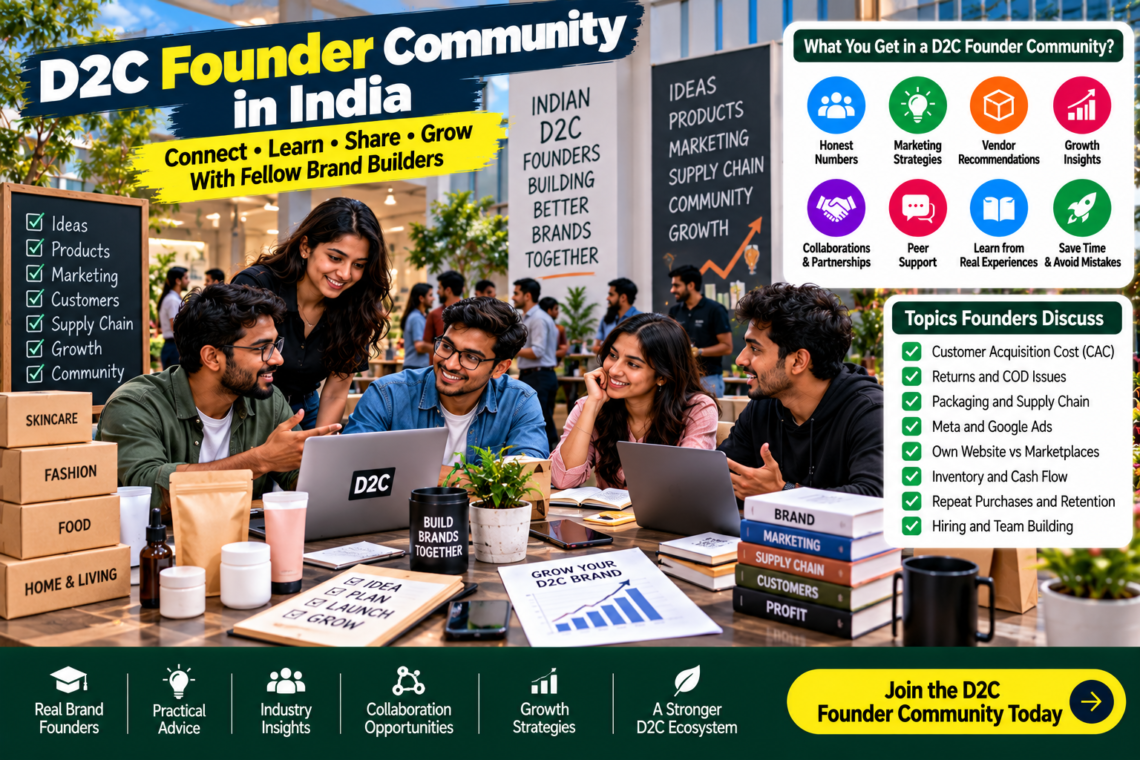
Honest numbers. Real conversations about customer acquisition cost, return rates, margins and repeat rates, without the polished version from conference stages.
Vendor recommendations. Which packaging supplier is reliable, which courier works for your pin codes, which payment gateway has fewer failures.
Ad and channel lessons. What worked on Meta, Google or marketplaces, and what quietly burned cash.
Shortcuts for the boring problems. Handling returns, writing a refund policy, dealing with a bad batch, naming a product without getting legal trouble.
Warnings before expensive mistakes. Over-ordering stock, hiring an agency too early, launching too many products at once.
Support in bad months. Every D2C brand has a month when ad accounts get restricted, a supplier disappears or a courier loses a week of orders. Someone who’s been there helps.
Questions Founders Ask Each Other
- What’s a healthy return rate for my category?
- How do you handle COD fraud and fake orders?
- Is it better to sell on my own site, marketplaces or both?
- How much stock should I hold before a sale?
- How do I get customers to reorder?
- When does it make sense to hire for performance marketing?
These are hard to answer from a blog post, but a peer who has run the numbers can often answer in a few lines.
How to Pick the Right Community
- Real brand owners. Look for members who actually sell products, not only people planning to.
- Open conversation about numbers. If no one shares costs or margins, the advice stays vague.
- Mixed categories. Beauty, food, apparel and home brands face different problems and learn from each other.
- Active, not just big. Check whether people are replying this week.
- No constant pitching. Agencies and tool vendors selling in every thread are a warning sign.
- Mix of stages. Founders a few steps ahead are as useful as peers at your level.
Getting More Out of It
- Be specific. “How do I reduce CAC?” gets generic replies. “My skincare brand’s CAC on Meta has doubled in two months, here’s my creative and audience” gets real feedback.
- Share your wins and losses. People open up when someone goes first.
- Help others. If you’ve solved a packaging or returns problem, say how.
- Follow up. When someone offers a tip, report back on whether it worked.
- Meet offline when you can. Founder meetups often lead to supplier introductions and collaborations.
Collaboration Opportunities
D2C brands often share audiences without competing. A tea brand and a mug brand, or a skincare label and a wellness app, can run joint giveaways, bundle offers or co-branded content. A community makes finding such partners much easier.
A Realistic Expectation
A community won’t fix weak products or poor margins. What it does is shorten the time between making a mistake and learning from it, because someone in the group has already paid for that lesson. It also makes the work less lonely, which matters more than people admit.
Find Your People
If you’re building a consumer brand and want to talk to other Indian entrepreneurs, YBF (Your Best Friend) is a community where founders from different industries share honest advice and support. You can also browse more founder resources on our site.
Final Thought
D2C moves fast and punishes guesswork. A good D2C founder community in India gives you real numbers, trusted vendors and people who understand why a lost courier shipment can ruin your Monday. Join one, show up regularly and share what you learn.