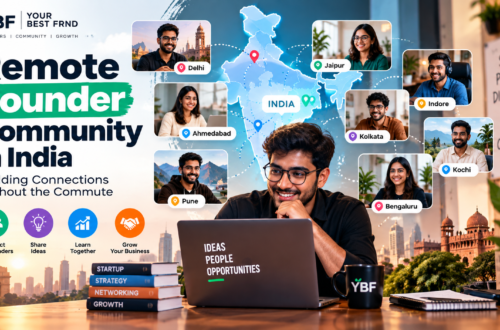
Running a business in India comes with its own particular kind of pressure. There’s the market, the competition, the funding conversations, and then there’s the quieter weight nobody really prepares you for: doing it all without anyone who truly understands what it feels like. That’s exactly why so many founders are now searching for an entrepreneur support group in India, not just another networking event.
Why “Support” Matters More Than “Networking”
Networking gets you contacts. Support gets you through a bad week. Those are two very different things, and founders often realize the difference only after they’ve collected a stack of visiting cards that never turn into real help.
A support group isn’t about pitching or selling. It’s about having people who’ll listen when a co-founder relationship gets tense, when a big client walks away, or when you genuinely don’t know if the business will survive the next quarter. Employees can’t be that person. Investors definitely can’t. Family tries, but they usually don’t understand the specifics of running a company.
What Founders Are Actually Dealing With
If you talk to enough entrepreneurs in India, the same struggles show up again and again:
Cash flow keeps founders up at night more often than anyone admits publicly. Hiring the right people, and then keeping them, takes far more energy than most first-time founders expect. Decision fatigue creeps in quietly, where even small choices start to feel exhausting because there’s no one to share the weight with. And loneliness, real loneliness, sits underneath most of it, especially for solo founders or those running their business from smaller cities without a strong local startup scene.
None of this shows up in a pitch deck. But it’s the daily reality for most people building something from scratch.
What a Good Support Group Looks Like
Not every group labeled “community” actually functions as one. A few things separate the useful ones from the ones that fade into an inactive WhatsApp group within a month.
Members should be people actually running something right now, not just people who talk about ideas. The group should be small enough that people remember each other, rather than a channel of two thousand silent names. Conversations should go both directions, where today you’re asking for help and next month you’re the one answering someone else’s question. And there should be room to admit things aren’t going well, without that admission changing how people see you.
How Founders Are Finding These Groups Today
A few years ago, this mostly happened through local meetups and college alumni networks. That’s shifted quite a bit. Online-first communities have become common because they remove the biggest barrier, which is geography. A founder in Coimbatore can now be in daily conversation with someone in Pune or Ahmedabad without either of them booking a flight.
This matters a lot in a country as spread out as India, where the “startup scene” often just means a handful of metro cities. Founders outside those hubs used to be left out of the conversation entirely. Online communities have quietly fixed that.
Getting the Most Out of a Support Group
Simply joining rarely helps on its own. The founders who benefit the most tend to do a few things consistently. They introduce themselves properly instead of a one-line hello, share what they’re actually building and where they’re stuck. They ask specific questions rather than vague ones, because “how do I grow my business” gets a vague answer, while “how did you get your first 20 customers with zero ad budget” gets a real one. They also show up regularly, because trust in these groups is built slowly, not in a single conversation.
Why This Trend Is Growing
India’s startup ecosystem is often described through big funding numbers and unicorn counts. That story leaves out the majority of founders, the ones running small teams, bootstrapping, figuring things out with limited resources. For them, an entrepreneur support group isn’t a nice-to-have. It’s often the difference between quitting during a hard month and pushing through it because someone else has been there too.
Looking for a Support Group That Actually Understands Founders?
YBF (Your Best Friend) connects entrepreneurs across India who want honest conversations and real support, not just another networking event. Visit yourbestfrnd.com to learn more and join the community.