Ask experienced founders what helped them most in the early years and many won’t name a tool or a funding round. They’ll name a person, or a small group of people, who picked up the phone when things went wrong. That’s what a good startup founder community in India gives you. Not a list of contacts, but a place where the problem you’re stuck on has probably already been solved by someone who’s willing to say how.
What a Founder Community Actually Is
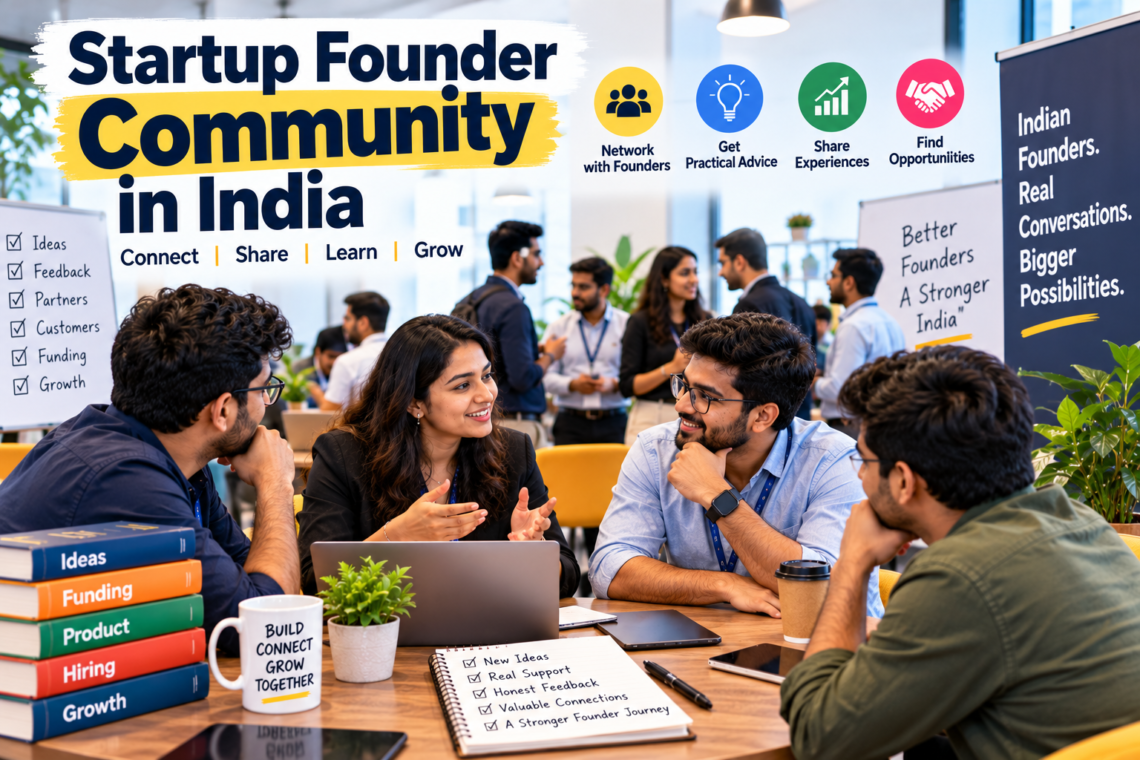
It’s a group of founders who talk to each other regularly. The format varies. It might be a WhatsApp or Telegram group, an online platform, a city meetup, a membership circle or a sector-specific network. What makes it a community and not just a group chat is that people reply, help and come back.
It’s different from a networking event, which is a single evening. A community is ongoing, so trust has time to build.
Why Founders Join
Most founders are surrounded by people and still alone with their real problems. Employees need you confident. Investors want good news. Family and friends mean well but often don’t understand what a bad month looks like when you run a company.
A community fills that gap in a few ways. You get practical answers, like pricing, hiring, vendors and sales. You get honest feedback from people with nothing to gain from flattering you. You get introductions to customers, mentors, co-founders and sometimes investors. And you get company, which matters more than most people admit.
Types of Communities You’ll Find
Online general communities. Open to founders from anywhere in India, easy to join and useful if you live outside the big metros.
City-based groups. Good for meeting in person. Hyderabad, Bengaluru, Mumbai, Delhi NCR, Pune, Chennai and Ahmedabad all have active scenes, each with its own character.
Sector-focused communities. Fintech, SaaS, healthtech, D2C, agritech and edtech founders face problems that general groups can’t fully address.
Groups for specific founders. Women founders, first-time founders, student entrepreneurs, solopreneurs and bootstrappers often prefer circles that share their situation.
Incubator and accelerator networks. Useful for structure and mentors, though access depends on being accepted into a programme.
College and alumni networks. Underrated, especially for early introductions.
Many founders belong to two or three at once, each serving a different purpose.
How to Choose One That’s Worth Your Time
Skip the member count. Look at these instead.
Are people actually building things right now? Advice from active founders is worth much more than advice from people who only talk about starting up. Is the group active? Scroll through recent conversations. If questions go unanswered for days, move on. Is the tone helpful? Skim a few threads. Kind, specific replies are a good sign. Does the group stay on topic, or is every other message a sales pitch? And does the community handle confidentiality well? People should feel safe talking about real problems.
A quick test is to ask one specific question and see what comes back within a day or two.
Free or Paid?
Free communities are easier to join and often large. They can be great, but quality varies and activity can fade. Paid communities tend to be smaller and more curated, because a fee filters out people who aren’t serious. Neither is automatically better. A small free group of ten committed founders can beat an expensive one full of silent members. Judge by activity and usefulness, not price. If you’re considering a paid one, ask whether you can try it first and what exactly the fee covers.
How to Get Real Value
Joining does nothing on its own. A few habits make the difference.
Introduce yourself properly. Say what you’re building, where you’re stuck and what kind of help would be useful. Ask specific questions. “How do I get customers?” gets vague answers, while “How did you get your first ten paying clinics in a small town?” gets real ones. Answer other people’s questions when you can, even if you feel like a beginner. Follow up when someone helps you, and tell them how it turned out. Move good conversations to a call or a coffee. And give it time, because trust builds over months, not days.
Mistakes to Avoid
Joining a dozen groups and engaging in none. Only taking and never giving. Pitching your product in every conversation. Sharing confidential details about customers or investors. Expecting immediate results. Leaving too early because the first week was quiet.
What a Community Won’t Do
It won’t build your product, find your customers or fix a weak idea. It will shorten the time between making a mistake and learning from it, and it will make a long, uncertain journey less lonely.
Where to Go Next
Founder communities touch many parts of the journey, from validating an idea and building a first version to hiring, fundraising and building your name. If you’re in a particular sector or city, look for groups that match it, because specific conversations are usually more useful than general ones.
If you want a place to start, YBF (Your Best Friend) is a community for Indian entrepreneurs where founders share honest advice and support. You can also find more guides on our resource page.
Pick one group, show up regularly and ask a real question this week. The right community won’t change your business overnight, but it often changes how long you can keep going.