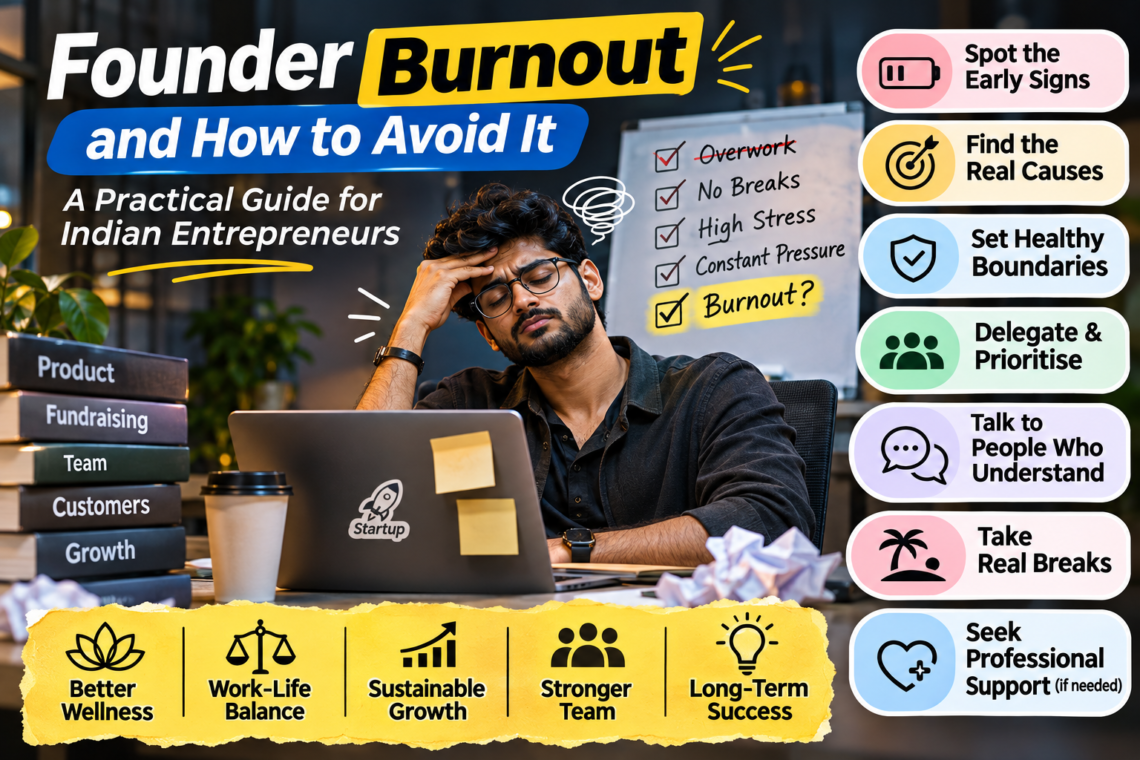
Startups reward long hours, and founders often wear that as a badge of honour. Working through weekends, skipping meals and answering messages at midnight start to feel normal. Then one morning the work that once excited you feels heavy, and even small decisions feel like climbing a hill. This is what many people call burnout. If you are building a company, understanding founder burnout and how to avoid it is not a luxury. It protects your health, your team and the business itself.
What Burnout Actually Is
The World Health Organization describes burnout as a work-related syndrome caused by long-term stress that has not been managed well. It points to three main features: constant exhaustion, a growing sense of distance or cynicism about work, and reduced effectiveness. It is not a medical condition in itself, and it is not the same as a bad week or a tiring month. It builds slowly. Many founders do not notice it until it has been growing for a long time, because the signs look like ordinary startup pressure.
Why Founders Are Especially at Risk
Founders carry a particular mix of pressure. You are responsible for salaries, customers, investors and your own family’s finances, often all at once. There is no fixed working day, and the business can follow you home. Many founders also feel lonely, because they cannot share every worry with their team, and friends or relatives may not understand the pressure. In India, there is an extra layer of social expectation. Family members may ask why you left a stable job, and admitting that you are tired can feel like admitting failure. All this makes it easy to push through for too long.
Early Warning Signs
Burnout rarely arrives overnight, so watch for patterns. You may feel tired even after sleeping, or dread starting the day. You may become irritable with your team, your partner or your customers over small things. Work you used to enjoy begins to feel pointless. You might find yourself putting off decisions, making more mistakes or losing interest in the business. Sleep, appetite or concentration may change. Some people start drinking more tea, coffee or alcohol to keep going, or withdraw from friends. None of these signs prove burnout on their own, but several together, lasting for weeks, are a reason to stop and pay attention.
Habits That Quietly Cause It
Most burnout comes from daily habits, not one bad event. Working without any fixed off time is one. Saying yes to every request, even when your plate is full, is another. Many founders also try to do everything themselves because delegating feels slow or risky. Constant comparison with other startups on social media adds pressure, since you see their announcements and not their struggles. Skipping sleep, meals and exercise “just for this month” turns into a permanent state. Tying your self-worth to the company’s numbers makes every bad week feel personal.
Build Boundaries You Can Keep
You do not need a perfect routine. You need a few boundaries that you can actually follow. Choose a time when work ends on most days, and protect at least one day a week from meetings. Turn off work notifications at night, or keep them to a short list of urgent contacts. Block time in your calendar for deep work so that the day is not only spent reacting. Eat proper meals, sleep enough and move your body, even if it is just a walk. These habits sound basic, but they are the first things to go when you are overworked and the first things to restore your energy.
Delegate and Prioritise
Trying to do everything is a quick way to burn out. List what you do in a week, and mark the tasks only you can do. Pass the rest to someone else, even if they do it slightly differently from how you would. Hire help or use simple tools for repetitive work such as invoicing, scheduling or basic customer replies. Learn to say no to meetings and requests that do not move the business forward. Each time you do this, you free up energy for the decisions that really need your attention.
Talk to People Who Understand
Isolation makes everything worse. Talk to other founders who face similar problems, because they will not judge you for being tired or confused. A mentor can offer a calmer view of what feels like a crisis. A peer group or founder community can give you a place to say the things you cannot say at work. If you want to find one, our guide to the startup founder community in India explains how to choose a group and use it well. Also talk to family and close friends honestly, rather than hiding how tired you are.
Take Real Breaks
A short weekend off is good, but a proper break now and then does more. Even a few days away from email and messages can help you see problems with fresh eyes. Many founders find that retreats, travel with peers or time in nature help them reset. YBF also lists wellness retreats and trade tours as part of its community offerings, which can combine rest with meeting new people. Whatever you choose, aim for a break that actually restores you, not one where you carry your laptop.
When to Seek Professional Help
If exhaustion, low mood or anxiety is lasting for weeks and affecting your sleep, relationships or ability to work, speak to a doctor or a qualified mental health professional. This is not weakness, and it is far better to do it early than late. In India, you can reach the government’s free mental health helpline, Tele-MANAS, for confidential support. If you ever feel that you might harm yourself, contact emergency services or a trusted person right away.
Final Thoughts
A company run by an exhausted founder is a weak company, however hard the founder works. Notice the early signs, set boundaries you can keep, share the load and keep people around you who understand the journey. If you want to build that support network, connect with the community at YBF.