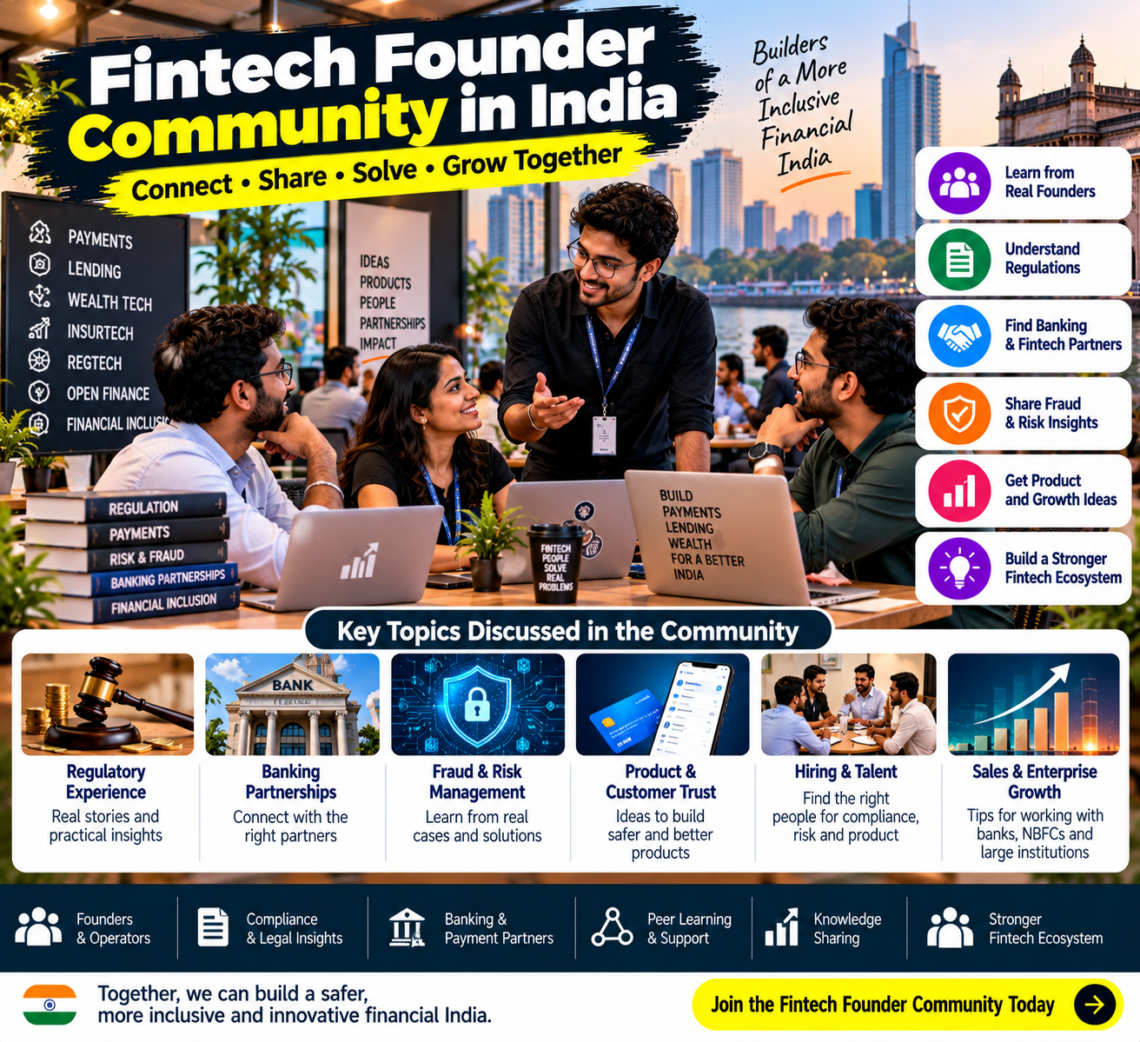
Most startups worry about customers and cash. Fintech founders worry about those too, plus regulators, banking partners, fraud and the fact that a single rule change can reshape the business overnight. That’s why a fintech founder community in India isn’t a nice extra. It’s one of the few places where you can ask “has anyone dealt with this?” and get an answer from someone who actually has.
Why Fintech Is a Different Game
Building a payments app, a lending platform or a wealth tool isn’t like building a food delivery app. You deal with other people’s money, and the stakes are higher.
- Regulation matters from day one. Depending on what you do, the Reserve Bank of India, SEBI or IRDAI may have a say.
- Trust takes longer to earn. People are careful with money and slow to try something new.
- Banking and payment partners hold power. Getting and keeping them is a business in itself.
- Fraud and security risks are real. One breach can end a young company.
- Compliance costs time and money, even before you have revenue.
- Sales cycles can be long, especially when selling to banks and larger institutions.
A general startup group can help with fundraising and hiring. A fintech circle helps with the parts that are unique to you.
What You Get From Other Fintech Founders
Practical regulatory experience. Not legal advice, but real stories: what a licence process felt like, which questions regulators asked, which documents slowed things down.
Partner introductions. Founders often know which banks, payment processors or sponsor partners are responsive for early-stage companies.
Fraud and risk lessons. How others spot suspicious accounts, handle chargebacks and set limits, shared honestly.
Product and trust ideas. What made users comfortable enough to link a bank account or complete a first transaction.
Hiring advice. Where to find compliance, risk and payments engineers without big-company salaries.
Sales help. Selling to banks, NBFCs and enterprise buyers takes patience. Peers can share what worked.
Company in stressful moments. A delayed licence or a sudden partner exit is easier to handle with people who’ve been there.
Questions Fintech Founders Ask Each Other
- Which licence or registration does my kind of product need?
- How did you find your first banking partner?
- How do you explain security to a nervous first customer?
- What’s a reasonable fraud or default rate for my category?
- How long did your compliance process take?
- When do I need a full-time compliance person?
- How do I sell to a bank without a long, silent wait?
These are hard to answer from a blog post. A peer a year ahead of you can often point you in the right direction.
A Careful Note on Rules
Regulations in finance change, and the details depend on your exact model. Treat community advice as experience, not legal guidance. Before you launch or change anything related to money, data or customer onboarding, speak to a qualified lawyer or compliance adviser and check the current rules from official sources such as the regulator’s website. Data-protection rules, including the Digital Personal Data Protection Act, also affect how you handle customer information.
How to Choose the Right Community
- Members who run live fintech products, not only people interested in the sector.
- A mix of segments. Payments, lending, insurance, wealth, accounting and B2B tools all learn from each other.
- Honest conversations about failures, not just wins.
- No hard selling. Vendors pitching in every thread is a warning sign.
- Active replies. Check whether questions get answers within a day or two.
- Respect for confidentiality. People should feel safe discussing problems without worrying that details will leak.
Make the Most of It
- Say clearly what you’re building. “A UPI-based collections tool for small coaching centres” is easier to help than “a fintech startup.”
- Ask specific questions. “How did you get your first sponsor bank?” beats “How do I start?”
- Share lessons after you learn them. A short post about a licence mistake helps others and earns respect.
- Protect customer and company data when you share examples. Anonymise anything sensitive.
- Follow up with people you meet. Fintech is a small world, and relationships travel.
- Give before you ask. Introductions and honest feedback build goodwill.
Mistakes a Community Can Help You Avoid
- Launching a product before understanding the rules around it
- Relying on one banking or payment partner with no backup
- Ignoring fraud until it becomes expensive
- Overpromising returns, safety or speed in marketing
- Hiring too late for compliance and security
- Pricing too low for a product that carries real risk
What to Expect Realistically
A community won’t make your licence appear or your partner sign faster. What it does is save you months of guessing, put you in touch with people who’ve already done the hard parts and remind you that long delays and sudden changes are normal in this field.
Find Your People
If you’re building in fintech and want honest conversation with other Indian entrepreneurs, YBF (Your Best Friend) is a community where founders share real experience. You can also read more guides on our resource page.
Final Thought
Fintech rewards patience, care and good relationships. Surround yourself with founders who’ve faced regulators, partners and fraud, ask specific questions and share what you learn. In a field where the rules keep moving, a trusted circle is one of the best assets you can have.