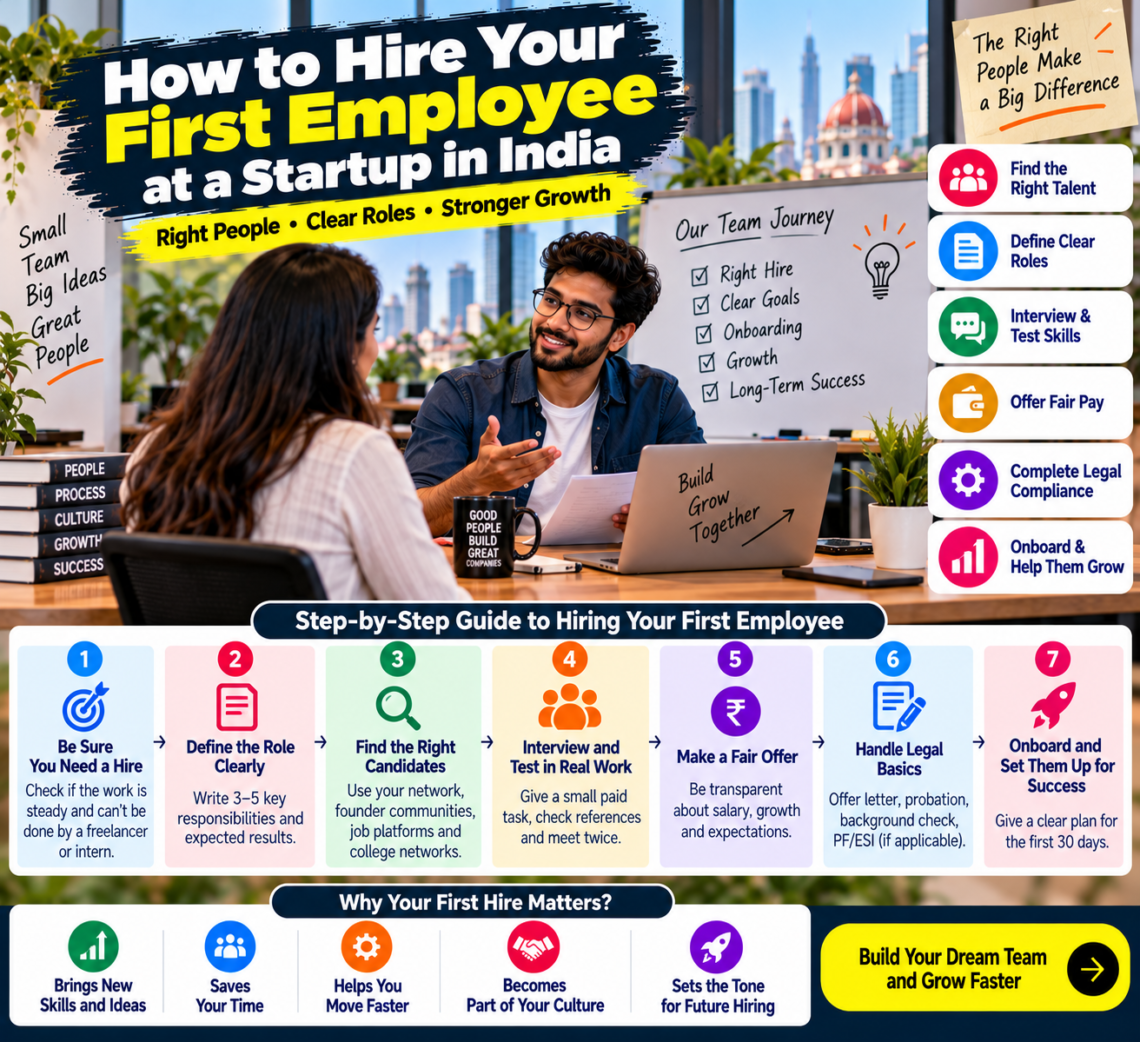
Your first hire changes the company in a way no later hire will. Until now, every decision was yours. After this, someone else’s habits, mood and mistakes start shaping the business too. If you’re figuring out how to hire your first employee at a startup in India, the real task isn’t finding a good résumé. It’s finding one person who can work with little structure and still care.
First, Be Sure You Need an Employee
Many founders hire because they’re tired, not because the work needs a full-time person. Ask yourself:
- Is this work steady, or does it come in bursts?
- Could a freelancer or part-timer handle it for now?
- Will this person bring in money or save you real hours every week?
- Can you pay them for at least six months without panic?
If the work is irregular, a freelancer or an intern may suit you better for the first few months.
Write Down What Success Looks Like
“Help with everything” is not a job. Before posting anything, write three to five results you expect in the first three months. For example: “Handle all customer calls and bring complaint response time under a day,” or “Ship two features a month without help.”
When a role is clear, candidates know whether they fit, and you know whether they’re delivering.
Pick the Right Type of First Hire
Early teams usually need one of three kinds of people:
- A generalist. Someone happy to do operations, support, a bit of sales and whatever else comes up.
- A builder. A developer, designer or production person who makes the product.
- A seller. Someone who gets customers, if you aren’t doing this yourself.
Hire for the thing that hurts most right now, not the thing that sounds impressive.
Where to Find Candidates
- Your own network. Former colleagues, college juniors and friends of friends often turn out best, because someone can vouch for them.
- Founder communities. Ask in groups where people know your work. A recommendation travels faster than a job post.
- Job platforms and LinkedIn. Useful, but expect many applications from people who haven’t read the role.
- Colleges and internship platforms. Good for juniors, interns and people willing to learn.
- Local business circles. Especially for operations, sales and field roles.
Be honest in your post about the size of the company, the salary range and the pace. The right person will be drawn to the honesty.
Test Before You Commit
Interviews show how someone talks. They don’t show how someone works.
- Give a small paid task. A few hours or a couple of days of real work is ideal.
- Talk through a real problem. Ask how they’d handle a situation you faced last month.
- Check references. Speak to a former manager, not just a friend.
- Meet them twice. Once formally, once over chai.
- Notice how they ask questions. Good early hires ask smart ones.
If you can, offer a probation or trial period, and make the terms clear in writing.
Pay Fairly Within Your Means
Early-stage founders often can’t match big-company salaries. What you can offer is responsibility, learning and flexibility. Be upfront about the numbers, don’t promise raises you can’t afford and keep payments on time every month. Late salary breaks trust faster than a low salary does.
If you’re considering equity or stock options, speak to a lawyer and a chartered accountant before promising anything. Vague promises cause more fights than low pay.
Indian Basics You Shouldn’t Skip
- Written offer letter with role, salary, start date, probation and notice period
- Notice periods. Many Indian professionals serve 30 to 90 days, which affects when they can join.
- Background verification, with the candidate’s consent
- Registrations and compliance such as PF, ESI and professional tax, which depend on headcount, state and current rules
- A basic employment agreement with confidentiality clauses
A CA or a labour-law adviser can tell you exactly what applies to you. Don’t rely on guesswork.
Plan the First Thirty Days
Many new hires leave because nobody knew what to do with them on day one.
- Week one: Introduce the team, tools and customers. Share your goals openly.
- Weeks two to four: Give one clear project and check in every few days.
- Day thirty: Sit down and talk honestly about what’s working and what isn’t.
- After that: Weekly check-ins keep small problems from growing.
Write down simple routines now, like how you handle customer requests or approve spending. It saves you repeating yourself.
Mistakes First-Time Hirers Make
- Hiring a friend you can’t correct. Friendship and feedback don’t always mix.
- Hiring someone overqualified who gets bored in a messy startup
- Hiring too early, before the work is steady
- Skipping reference checks because the person seems nice
- Giving a vague role and then feeling disappointed
- Ignoring culture fit. Skills can be taught. Attitude is harder.
- Avoiding the difficult talk when something isn’t working
If it isn’t working after a fair attempt, address it early. A slow exit hurts both sides more.
Learn From Founders Who Have Done It
Hiring is easier when you can ask someone who made the same mistake last year. YBF (Your Best Friend) is a community for Indian entrepreneurs where founders share honest advice on hiring, pay and team building. You can also read more founder guides on our resource page.
Final Thought
Your first employee isn’t just help. They become part of how your company runs, so choose with care. Define the role clearly, test with real work and keep the relationship open and honest. A careful first hire makes the next ten much easier.