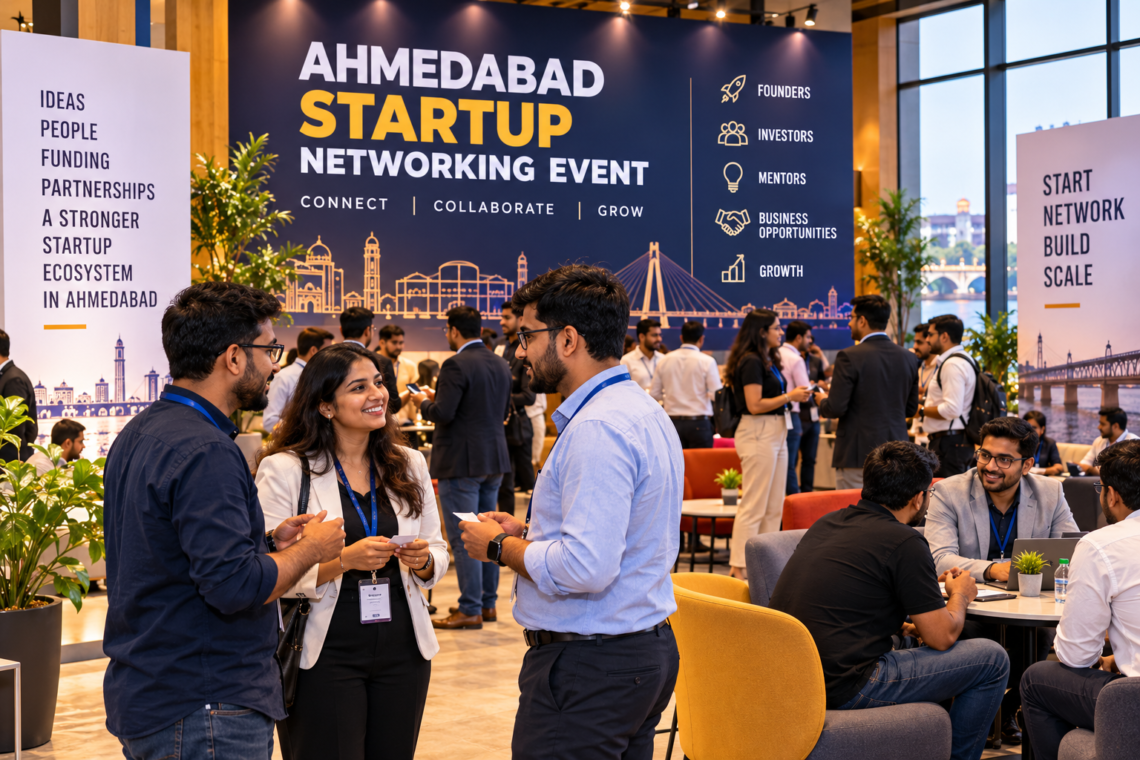
Ahmedabad has never been short of businesses. Textiles, pharma, chemicals and trading families built this city’s reputation long before anyone said the word “startup”. Now a newer layer of founders sits on top of that old base, building software, consumer brands, fintech and manufacturing ventures. If you are one of them, you have probably noticed that the real help rarely comes from a pitch deck. It comes from a conversation with someone who has already solved the problem you are stuck on. That is the whole point of the startup founder networking events Ahmedabad has to offer, and the trick is knowing which ones are worth your evening.
The Main Types of Events You Will Find
Not every meetup serves the same purpose, and treating them all alike is the first mistake. Large community meetups are good for visibility. You meet many people quickly, hear a few speakers and collect contacts, but conversations stay short. Small curated mixers work differently. Organisers cap the number of attendees, sometimes restrict entry to founders who have a working product, and the room tends to be calmer. These suit founders who want honest talk about hiring, pricing and cash flow.
Investor-focused sessions are a third category. Series such as Primewise Founders Club have run VC Connect events in the city, aimed at founders who are close to raising money. Then there are institution-backed meetups around campuses and incubators. IIM Ahmedabad’s CIIE.CO and Innocity have hosted growth-stage founder meetups with community members on stage, which gives early-stage teams a look at what the next step could be. Finally, online sessions have become common, which helps if your schedule is tight or you are travelling.
Recurring Series Worth Knowing
Several organisers run events on a repeating basis rather than as one-offs. Entrepreneurs Mixer and Startup Mixer are curated evening gatherings that attract founders, senior executives and investors. Global Startups Club runs founder meetups in the city through the year, and eChai organises community meetups in partnership with local institutions. Dates, prices and formats change often, and some events are free while others charge a small fee, so check the organiser’s page before you register. Third-party listing sites are handy for discovery, but they can lag behind changes, so treat them as a pointer and not the final word.
How to Choose Which Event to Attend
Ask yourself what you need right now, not what sounds impressive. If you are still validating an idea, a casual coffee meetup with other early founders will teach you more than a formal investor evening. If you are preparing to raise, a curated investor session is more useful, but only after your numbers and story are ready. If you are hiring, look for events that draw engineers or operators, not only founders. Read the description closely. Phrases about limited seats, a stage requirement or a focus on a certain sector tell you who will be in the room.
Price is a weak signal. A free event can be excellent and a paid one can be a waste. A better test is whether the organiser names the kind of people attending and explains the format. Vague descriptions full of buzzwords usually mean a crowded evening of exchanged business cards.
Preparing Before You Go
Most people turn up with nothing and hope the evening does the work. A little preparation changes the result. Write a one-line answer to “what do you do?” that a stranger can understand without jargon. Decide on one thing you want from the evening, such as an introduction to a distributor, advice on a hiring problem or feedback on pricing. If the organiser shares an attendee list or a registration page, look up two or three people in advance, so you walk in with names instead of wandering.
Carry something simple to share, like a short link or a phone number you can send quickly. Heavy brochures rarely survive the walk home.
How to Actually Make Connections
The best conversations begin with a question, not a pitch. Ask what someone is building, what is slowing them down and what they would do differently. People remember being listened to. When you talk about your own work, be specific. “We supply packaging to cosmetic brands in Gujarat” is far more useful to a listener than “we are a B2B solutions company”.
Do not try to meet everyone. Two or three real conversations beat fifteen quick exchanges. If someone says something useful, note it on your phone straight away, because you will forget the details by morning.
The Follow-Up Decides Everything
Most networking value is lost in the week after the event. Send a short message within a day or two, mentioning something specific you discussed. Offer something before you ask for anything, such as an article, an introduction or a recommendation. If you promised to connect two people, do it quickly. Founders who follow up reliably get a reputation for it, and in a city where relationships still matter a great deal in business, that reputation travels far.
Building Your Own Circle
Once you know a few founders, consider starting a small recurring gathering of your own. A monthly breakfast with six or eight founders from different sectors can become more valuable than any large event. Keep it informal, rotate the host and agree to speak openly about what is going wrong. These closed circles are where founders share supplier contacts, warn each other about bad hires and sometimes find co-founders.
Final Thoughts
Ahmedabad’s startup community is growing, and the opportunities to meet other founders are real. The difference between those who benefit and those who just attend comes down to choice and follow-through. Pick events that match your current stage, show up with a clear goal, listen more than you pitch, and follow up like you mean it. A single good conversation can save you months of guessing.